

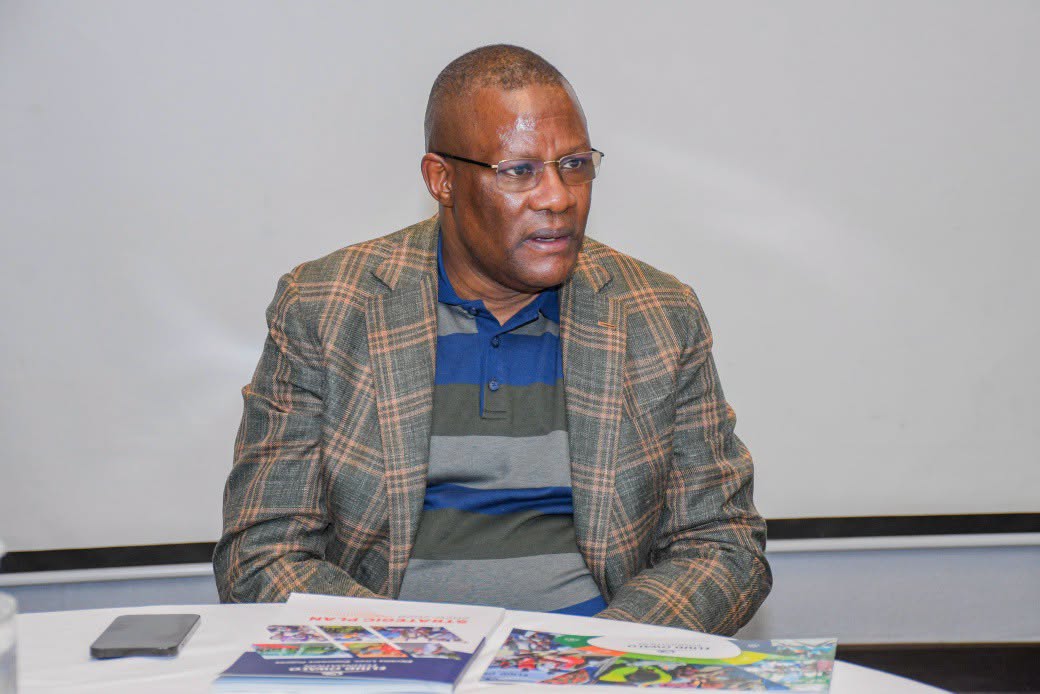
Gor Mahia Patron Eliud Owalo has renewed his call for a major transformation in the way Kenyan football clubs are run, insisting that long-term success can only be achieved through financial independence and professional management.
Owalo believes Kenyan clubs, including record FKF Premier League champions Gor Mahia, must reduce their reliance on donations, gate collections and short-term sponsorship agreements and instead adopt sustainable commercial strategies capable of generating consistent revenue.
Speaking about the club’s future vision, Owalo emphasized that football is increasingly becoming a business and that clubs must evolve to remain competitive both locally and on the continental stage.
“The future of football lies in running clubs professionally and independently. Our ambition must be bigger than local success. We want Gor Mahia to compete seriously in Africa. We want Gor Mahia to operate like successful clubs elsewhere in the world and build long-term financial stability,” Owalo said.
Vision Beyond Local Dominance
Owalo’s remarks come at a time when Gor Mahia continues to dominate Kenyan football but faces the familiar challenge of competing against financially stronger clubs in continental competitions.
Across Africa, clubs such as Al Ahly, Mamelodi Sundowns and Espérance de Tunis have built strong commercial structures through sponsorships, merchandising, broadcasting revenue, academies and strategic investments, allowing them to compete consistently at the highest level.
Owalo believes Gor Mahia can follow a similar path by strengthening its commercial operations and creating new revenue streams that are not dependent on matchday income alone.
A New Era for Kenyan Clubs?
The push for financial sustainability reflects a growing conversation within Kenyan football about the need for professional club management.
Many clubs in the FKF Premier League continue to depend heavily on benefactors, county governments, sponsors and fan contributions to meet operational costs. While these sources provide short-term relief, they often leave clubs vulnerable to financial instability when funding dries up.
Owalo’s proposal envisions a future where Gor Mahia functions as a modern football enterprise, leveraging its massive fan base, strong brand identity and rich history to attract investment and create sustainable income streams.
The Bigger Picture
For Gor Mahia supporters, Owalo’s vision represents more than just financial reform. It is a blueprint aimed at restoring the club’s status as a genuine continental force.
With increased commercial revenues, the club would be better positioned to invest in player development, improve infrastructure, strengthen its technical bench and compete more effectively in CAF competitions.
As African football continues to professionalize, Owalo believes the time has come for Kenyan clubs to embrace modern business practices if they are to bridge the gap with the continent’s elite.
If successful, the transformation could redefine not only Gor Mahia’s future but also provide a model for sustainable football development across Kenya.
