

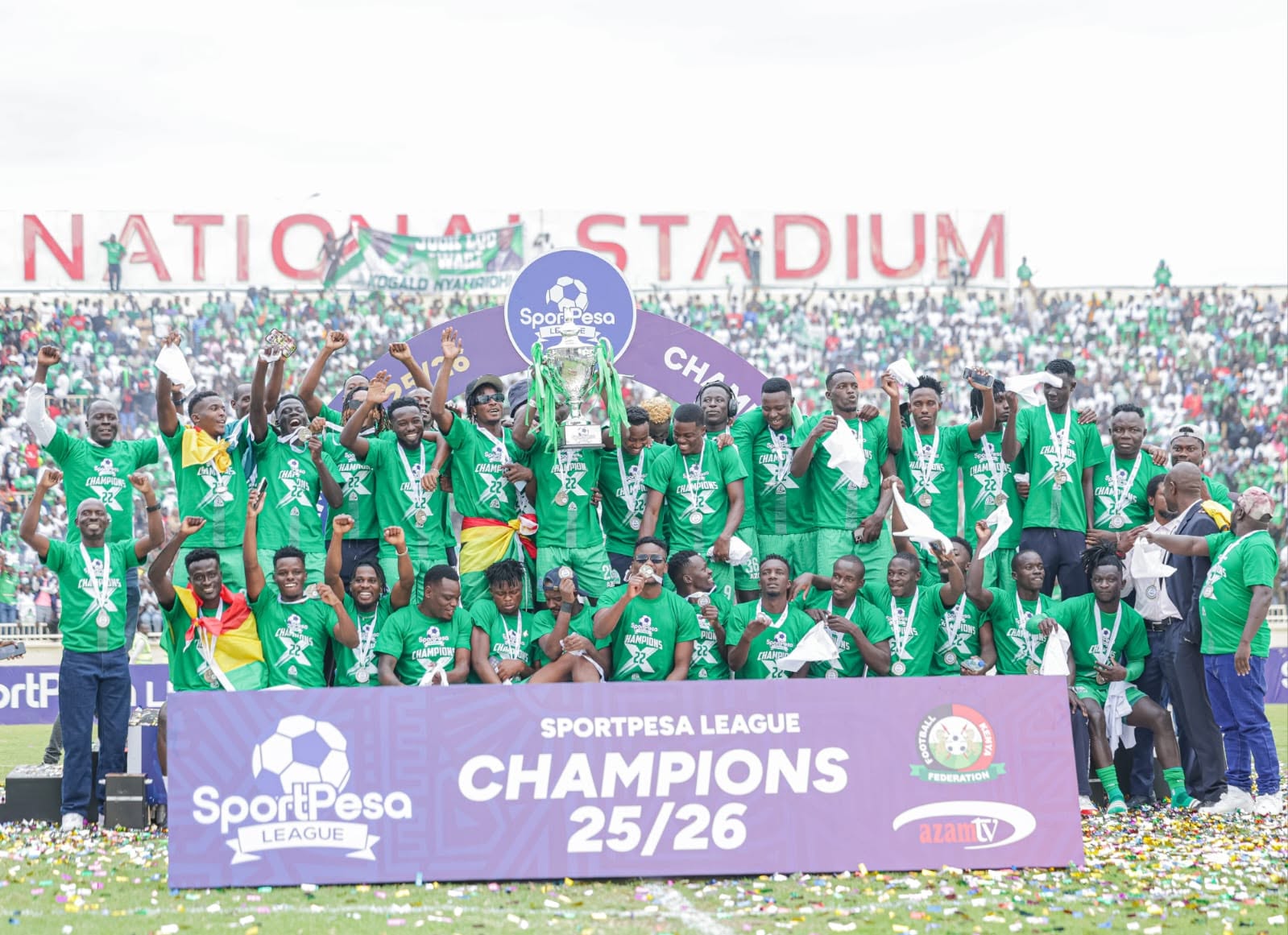
For decades, Gor Mahia Football Club has stood as the benchmark of success in Kenyan football, building a legacy founded on domestic dominance, passionate support, and an unmatched winning culture. However, as the club enters a new era marked by increasing commercial opportunities and growing institutional expectations, the conversation must evolve beyond winning league titles.
The challenge facing Gor Mahia today is not merely about who occupies leadership positions, but about how the club can transform itself into a modern, financially sustainable football institution capable of competing effectively both on and off the pitch.
Recent developments have demonstrated the immense commercial potential that exists within the club. High-profile fixtures such as the Mashemeji Derby continue to generate substantial revenue and attract significant corporate interest. Coupled with strong sponsorship partnerships and the support of influential stakeholders, Gor Mahia has an opportunity to establish a financial foundation that can secure its future for generations.
However, financial growth also brings new challenges. As resources increase, leadership positions become more attractive, and competing interests inevitably emerge. This is why governance, accountability, and professionalism must remain at the centre of the club’s development agenda.
Many supporters believe the time has come for leadership renewal and fresh thinking. Such sentiments should not be interpreted as a dismissal of the contributions made by past and current administrators. Dr. Ambrose Rather, they reflect a desire to see the club embrace modern management practices, strengthen its institutional structures, and position itself for long-term success.
For a club of Gor Mahia’s stature, success can no longer be measured solely by domestic trophies. The ambitions must be higher. Sustainable financial growth, investment in youth development, infrastructure expansion, enhanced supporter engagement, and consistent competitiveness in continental competitions should now form part of the club’s strategic priorities.
Equally important is the need to shield football operations from excessive external influence. While stakeholders from various sectors may contribute positively to the club’s growth, decisions concerning the future of Gor Mahia must always be guided by the club’s long-term interests rather than short-term political or personal considerations.
The future of Gor Mahia will not be secured by personalities alone. It will be secured through visionary leadership, sound governance, financial discipline, and a clear strategic plan that aligns with the aspirations of millions of supporters across Kenya, East Africa, and beyond.
As K’Ogalo looks ahead, the question is no longer whether the club can win another league title. History has already answered that question. The real challenge is whether Gor Mahia can build a sustainable football institution capable of thriving for the next fifty years.
That is the next frontier for Kenya’s most successful football club.
Disclaimer: The views and opinions expressed in this article are those of the author and do not necessarily reflect the official position of Gor Mahia News Portal, its management, sponsors, partners, or affiliated stakeholders. The article is intended to stimulate discussion on issues relating to football governance, leadership, and the long-term development of the club. Any references to individuals or institutions are made in the context of public discourse and should not be construed as statements of fact regarding their conduct, intentions, or performance.
