

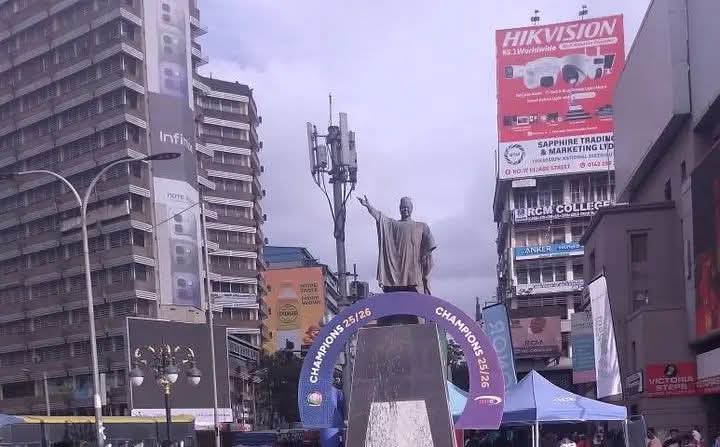
When thousands of Gor Mahia supporters converged at the Tom Mboya statue in Nairobi to celebrate the club’s latest triumph, it was more than just a victory parade. It was a tribute to a man whose influence remains deeply embedded in the foundation of Kenya’s most successful football club.
The late Tom Mboya, one of Kenya’s foremost independence heroes and statesmen, played a pivotal role in the formation of Gor Mahia Football Club in 1968. While widely celebrated for his contribution to Kenya’s political and economic development, Mboya’s place in the history of Gor Mahia is equally significant.
The Man Behind the Formation of Gor Mahia
Before Gor Mahia was established, Luo football was divided between two rival clubs: Luo Union FC and Luo Sports Club. The rivalry weakened the community’s football strength and limited competitiveness against other emerging teams in the country.
In late 1967, officials from the two clubs approached Tom Mboya, then Kenya’s Minister for Economic Planning and Development, seeking guidance on how to unite the factions. Mboya hosted several meetings at his Nairobi residence, bringing together football administrators, community leaders, and stakeholders to negotiate a merger.
The discussions culminated on February 17, 1968, when an agreement was reached to form a single club. Several names were proposed before the name “Gor Mahia” was adopted, giving birth to what would become one of Africa’s most recognizable football institutions.
Historians of the club credit Mboya as one of the key architects of the merger that created Gor Mahia, with many supporters regarding him as a founding patron of the club.
More Than a Politician
Tom Mboya’s involvement in Gor Mahia reflected his broader belief in unity, youth empowerment, and nation-building. At a time when football was emerging as a powerful social force in Kenya, he recognized the importance of creating strong institutions capable of inspiring communities and nurturing talent.
His influence extended beyond politics and into sports development, helping establish structures that would enable Gor Mahia to become a dominant force in Kenyan football.
A Legacy That Lives On
Just over a year after Gor Mahia’s formation, tragedy struck when Tom Mboya was assassinated in Nairobi on July 5, 1969. His death was deeply felt across the country and within the Gor Mahia fraternity.
Club records and historical accounts indicate that Mboya’s passing had a profound emotional impact on players, officials, and supporters, who viewed him as one of the guiding figures behind the club’s birth.
More than five decades later, Gor Mahia supporters continue to gather at the Tom Mboya statue before major matches and celebrations. The site has become a symbolic meeting point for the Green Army, representing both the club’s origins and the enduring legacy of one of Kenya’s most influential leaders.
As Gor Mahia continues to add trophies to its cabinet, fans often remember that the club’s success story began with a vision of unity championed by Tom Mboya. The celebrations may belong to the present generation, but the foundations were laid by leaders whose contributions continue to shape the identity of K’Ogalo today.SEO Title:
Tom Mboya’s Role in the Formation of Gor Mahia and Why Fans Still Honor Him.
