


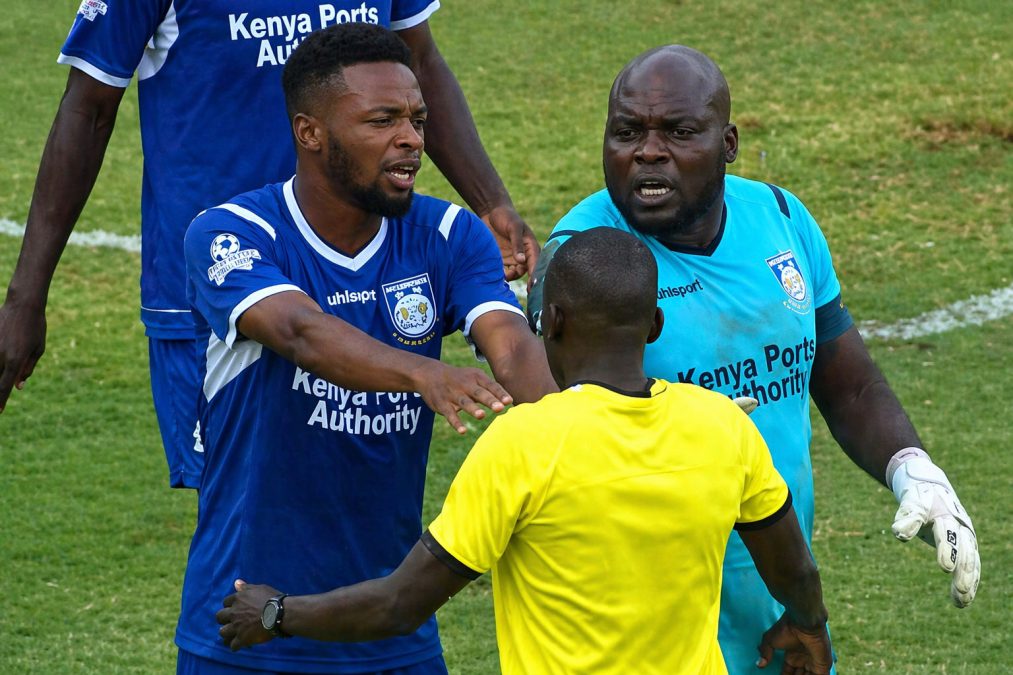
The spotlight has shifted from the players to the match officials after Football Kenya Federation suspended three referees over poor officiating standards in recent Kenyan Premier League matches, with referee Phanuel Omire receiving the heaviest punishment following the controversial clash between Gor Mahia FC and Bandari Football Club.
The decision comes after widespread criticism from fans, analysts, and football stakeholders regarding a series of questionable calls during the high-stakes encounter, a match that had major implications in the league title race.
Penalty Drama Sparks Debate
One of the most controversial moments came when Gor Mahia forward Sharif Musa went down inside the penalty area. Omire initially pointed to the penalty spot, signaling what many believed was a clear foul.
However, in a surprising turn, the referee reversed his decision after consultations with the fourth official. The sudden change sparked confusion among players and supporters, with many questioning the officiating process and whether proper procedures were followed.
The incident immediately ignited debate across Kenyan football circles, with some defending the reversal as teamwork among officials, while others argued it exposed inconsistency and lack of confidence in decision-making.
In leagues equipped with the Video Assistant Referee (VAR) system, such incidents are often resolved through video review. However, the absence of VAR in the Kenyan top flight continues to leave major decisions entirely in the hands of on-field officials, increasing scrutiny whenever controversial moments arise.

Early Final Whistle Raises More Questions
Another major talking point emerged at the end of the match when Omire blew the final whistle in the 92nd minute despite indicating five minutes of added time at the end of regulation.
The decision angered sections of the Gor Mahia bench and supporters, who felt the match had been ended prematurely. According to the Laws of the Game, the referee has authority over timekeeping, but added time shown by the fourth official is generally expected to be respected unless extraordinary circumstances arise.
Football analysts described the move as unusual and avoidable, especially in a match already surrounded by tension and contentious officiating calls.
FKF Takes Action
Following a technical review, FKF confirmed disciplinary action against the officials involved.
Omire has now been suspended for three match rounds and demoted to the FKF National Super League pending further technical assessment.
Two other referees, Samuel Kuria and Edwin Bobiya, were also suspended for two match rounds and demoted to the National Super League after separate assessments of their recent performances.
According to FKF, the officials failed to meet expected standards in several critical areas including:
Decision-making
- Application of the Laws of the Game
- Match management
- Concentration levels
- Teamwork and coordination among officials
The federation’s action signals a growing effort to improve officiating standards in Kenyan football amid increasing complaints from clubs and fans over refereeing inconsistencies.
Growing Pressure on Kenyan Refereeing Standards
The suspensions once again highlight long-standing concerns surrounding officiating quality in Kenyan football. Clubs across the league have repeatedly raised concerns over controversial decisions affecting results, especially during decisive stages of the season.
With the title race and relegation battle intensifying, pressure is mounting on FKF and the Referees Committee to restore confidence in match officiating.
The absence of VAR technology, limited referee development programs, and inconsistent disciplinary communication have often left fans frustrated and clubs demanding accountability.
For Gor Mahia supporters, the punishment of Omire may be viewed as partial vindication after widespread outrage following the Bandari match. However, many believe the bigger issue lies in the structural improvement of officiating standards across the league.
As Kenyan football continues to grow commercially and competitively, the demand for professionalism among match officials is becoming louder than ever.
