


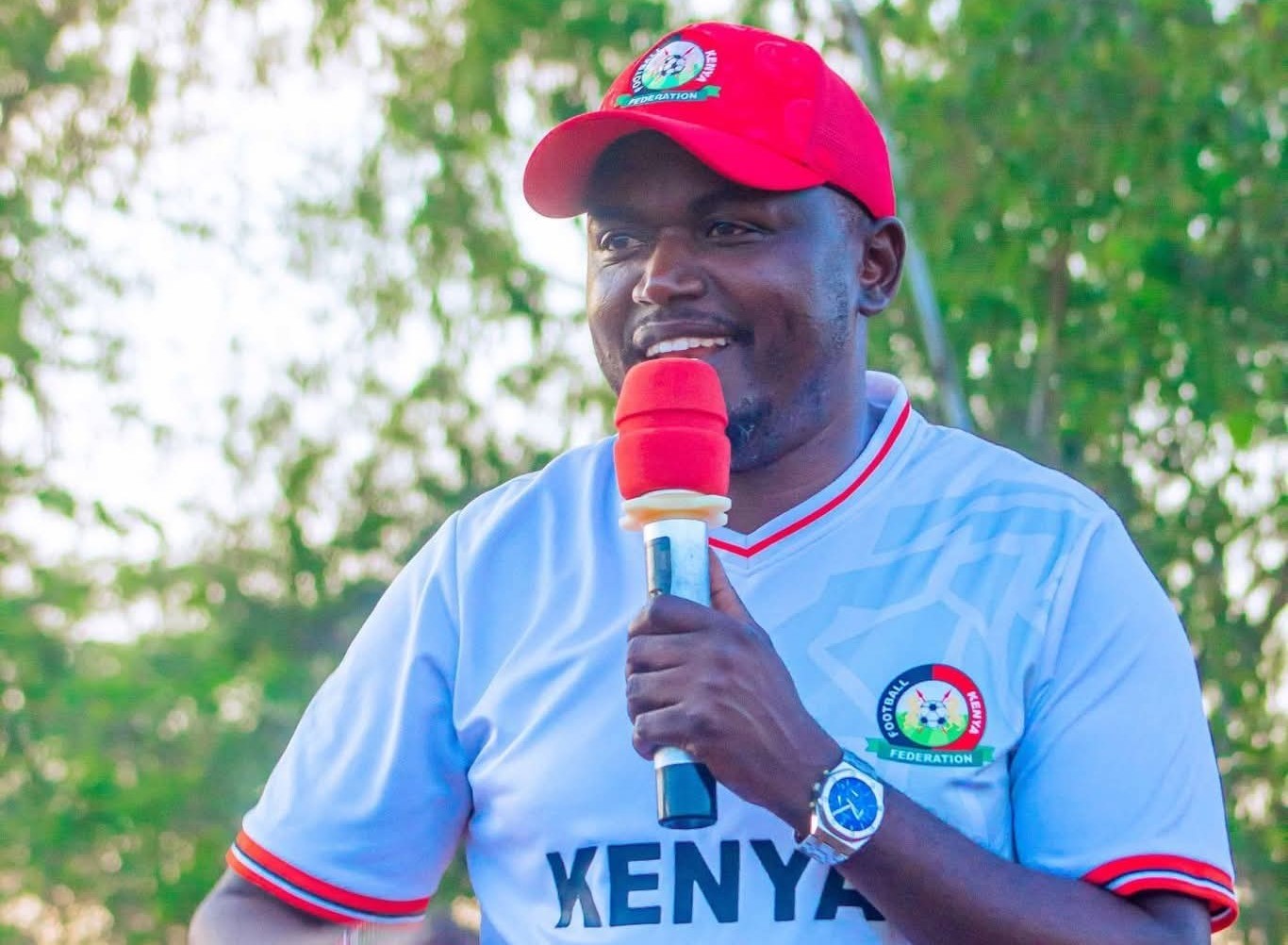
A political storm is quietly brewing within the Football Kenya Federation (FKF), with Nyanza Region NEC member Collins Kalee now at the centre of what insiders describe as a calculated move to politically neutralise him from the federation’s decision-making structures.
Kalee is reportedly facing a possible removal from office, with sidelining him for the remainder of his term increasingly being viewed as a “safer” political option by the FKF national leadership—one that avoids the optics of an outright purge while effectively stripping him of influence.
The warning signs became evident on Wednesday when Kalee was conspicuously excluded from a high-level consultative meeting convened by FKF President Hussein Mohammed. The meeting hosted Nyanza delegates to chart the way forward on the planned removal of CEO Harold Ndege and to shape recommendations on his successor—decisions that go to the heart of the federation’s power structure.
For a sitting NEC member to be locked out of such a forum has been interpreted by insiders as a deliberate political signal rather than an administrative oversight.
Sources familiar with the situation claim the manoeuvre against Kalee is being driven by a powerful club chairman from the Nyanza Region, allegedly acting with the blessing of sections of the federation’s executive. The move is viewed by some stakeholders as an attempt to weaken an independent voice within the NEC at a time when internal alignment is being aggressively enforced.
While FKF has remained publicly silent, the absence of any formal disciplinary process or stated charges against Kalee has raised serious governance questions. Critics argue that sidelining an elected NEC member without due process reflects a growing culture of political punishment within the federation, where dissent or non-alignment is increasingly treated as insubordination.
Kalee, one of the youngest NEC members, has previously been perceived as outspoken and unwilling to toe the line on contentious federation matters. That profile, sources suggest, may have placed him on a collision course with the current power centre as FKF seeks to consolidate authority amid ongoing leadership turmoil.
The unfolding situation has exposed deeper fault lines within FKF, particularly around regional representation, influence of powerful club officials, and the shrinking space for alternative viewpoints within the federation’s top organs.
As the leadership crisis at FKF intensifies, the handling of Collins Kalee’s case could become a defining test of whether the federation is committed to democratic governance or whether internal politics now outweigh institutional integrity.
