


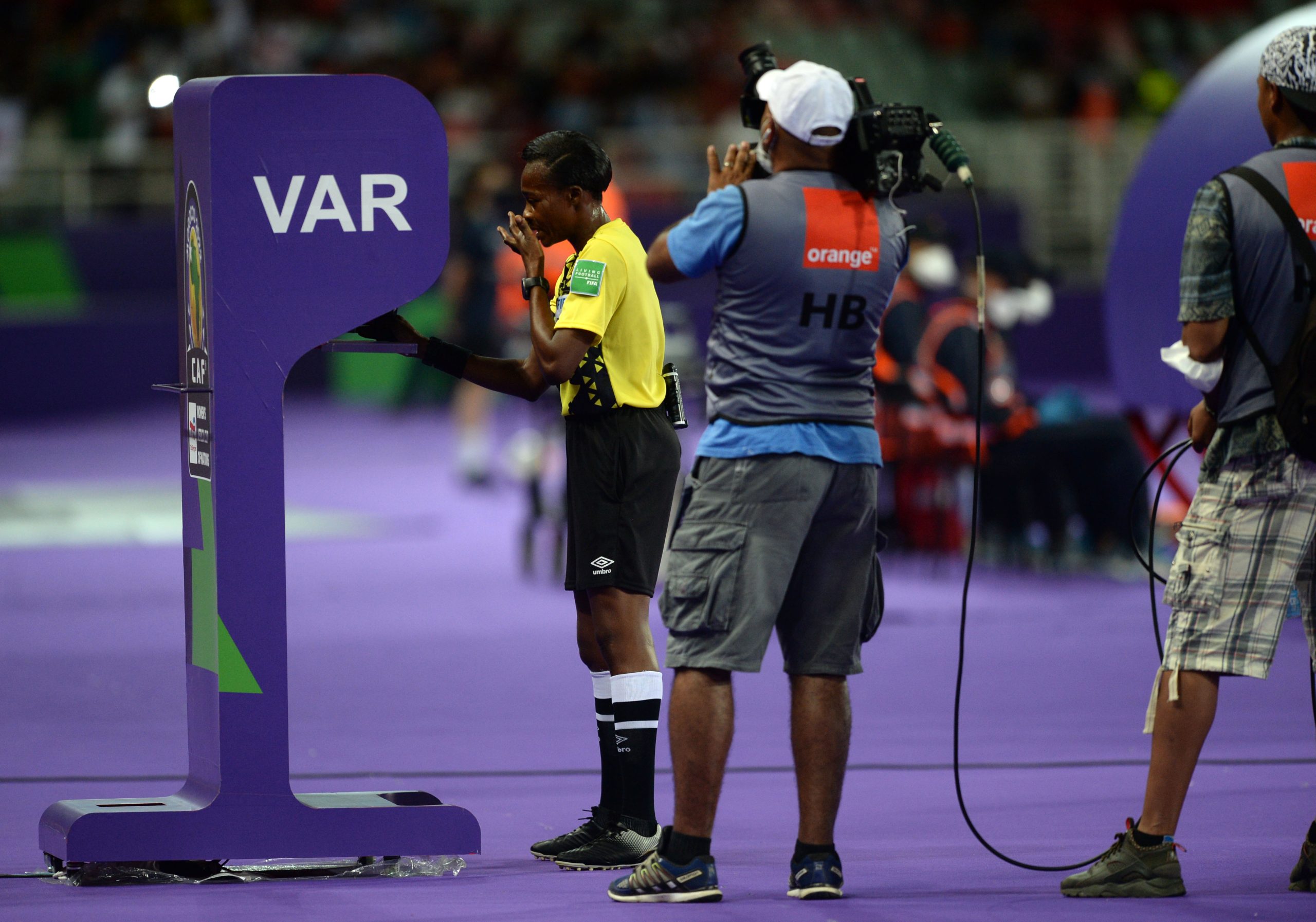
The use of Video Assistant Referee (VAR) technology at the Africa Cup of Nations (AFCON) has ignited renewed debate over fairness, transparency, and consistency in modern football, with growing voices arguing that African football is setting the standard while Europe lags behind.
Observers and fans following AFCON closely have noted a striking difference in how VAR is applied compared to major European leagues and competitions. In AFCON, VAR decisions have been widely praised for being neutral, open, and focused purely on justice rather than reputation or commercial value.
Unlike in Europe, where VAR is often accused of protecting so-called “big teams” and high-value brands, AFCON’s implementation has appeared refreshingly impartial. Decisions are made without fear or favour, regardless of a team’s history, star power, or market appeal. As a result, underdogs have competed confidently, knowing that outcomes will be determined on merit rather than influence.
This sense of fairness has had a visible impact on performances. Teams play with greater belief and intensity, fully aware that refereeing decisions are less likely to be swayed by external pressure. The tournament has consequently showcased the true quality, discipline, and tactical depth of African football.
Another major point of contrast lies in referee–player interaction. During AFCON matches, referees have shown a willingness to listen when players highlight potential missed incidents. Instead of punishing communication, officials often respond by consulting VAR and reviewing decisions calmly. This approach has strengthened trust between players and match officials.
In European football, the situation is markedly different. Players or coaches who gesture or verbally request a review risk immediate punishment, including yellow or red cards. Critics argue that this culture suppresses accountability and shields referees from scrutiny, reinforcing a rigid system that prioritizes authority over accuracy.
The debate has grown louder amid ongoing controversies in Europe involving inconsistent VAR calls, selective intervention, and perceived bias toward elite clubs. These issues have fueled accusations that VAR, rather than correcting injustice, has become a tool manipulated by football’s power structures.
As AFCON continues to earn praise for its officiating standards, some analysts and fans have gone as far as suggesting that the future leadership and philosophy of VAR should be influenced, or even headquartered — within the Confederation of African Football (CAF).
While such calls may be symbolic, the message is clear: African football is no longer just catching up. In areas of integrity and fairness, it may already be leading.
The AFCON VAR debate has now become more than a refereeing discussion, it is a direct challenge to how global football defines justice, power, and credibility in the modern game.
