


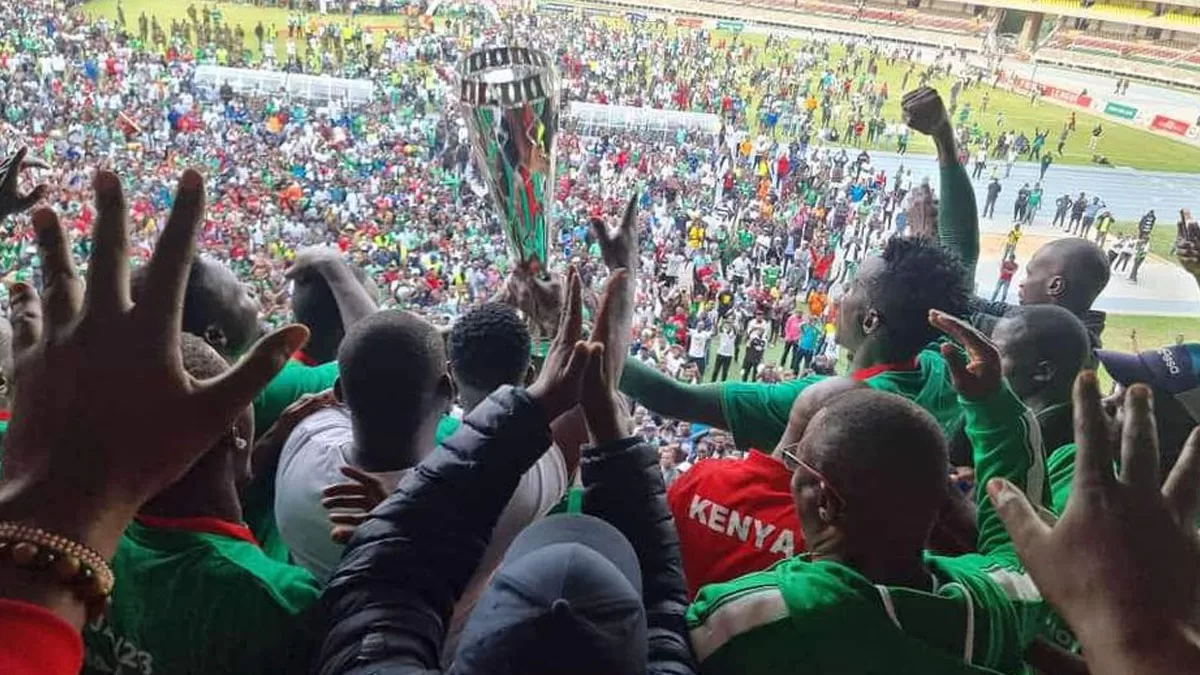
Whether through retirement, transfers, or sudden disappearances, footballers will always come and go. At Gor Mahia, this cycle has been constant since the club’s founding in 1968. Generations of players have worn the green jersey, each leaving behind memories etched in the club’s rich history.
But beyond trophies and performances, there’s something even more personal that players carry with them long after they leave nicknames. Like a peacock displaying its feathers, these nicknames become badges of honor, identity, and legacy.
So, where do these nicknames come from?
Borrowed Greatness: Inspired by Global Icons
Many Gor Mahia players earned nicknames through comparisons to world football legends.
Jared Ochieng’ was famously called “Makanaky”, thanks to his dreadlocks resembling Cameroonian star Cyrille Makanaky. Sammy Owino became “Kempes”, a nod to Argentina’s World Cup hero Mario Kempes, while Paul Ochieng earned “Kunde” after Cameroonian great Emmanuel Kunde due to his composure and physique.
In more recent years, this trend continued. Collins Okoth was dubbed “Gattuso” for his midfield grit, echoing Italian enforcer Gennaro Gattuso. Antony Akumu became “Vieira” after French legend Patrick Vieira, while Oscar Mbugua’s elegance earned him “Zizou”, inspired by Zinedine Zidane.
Brazilian flair also made its mark, Moses Otieno (“Dinho”) and Antony Gathu (“Gaucho”) both paid homage to Ronaldinho. Meanwhile, Joseph Njuguna carried the name “Pablo”, inspired by Argentine playmaker Pablo Aimar.
And who could forget Duncan Owiti’s rise to fame in 2010, earning him the nickname “Macheda” after Federico Macheda, following his clutch, match-winning performances?
From the Pitch: Skill, Style, and Personality
Some nicknames were born directly from moments on the pitch.
Abbas Magongo became “Zamalek” after a memorable red card incident in Egypt in 1984. Ben Oloo’s dazzling dribbles during the 80s dance era earned him “Breakdance.”
Defender Paul Oduwo was feared as “Cobra”, known for his fierce tackles and intimidating warm-ups. George Nyangi Odembo’s thunderous shots gave him the name “Artillery,” while Ogolla Michael’s dominance at the back saw him called “Machine.”
George Onyango, the creative force in attack, was aptly named “Fundi”, the master craftsman. Allan Thigo commanded the pitch so completely he became “Ogango Wuon Pap,” while Peter Dawo’s aggressive scoring instinct earned him the name “Omuga” (rhino).
Life Beyond Football: Professions and Daily Hustle
For some players, their lives off the pitch shaped their identities.
George “Chumb Reru” Otieno worked with Kenya Railways, earning a nickname meaning “railway line.” Maurice Ochieng, a prison warden, was called “Sonyi,” a street term for police.
Tobias Ocholla embodied hard work and grit, earning “Jua Kali,” while Duncan Makori’s profession as a teacher naturally gave him the name “Mwalimu.”
Politics and Pop Culture Influence
Even politics and global events found their way into Gor Mahia folklore.
Nahashon Oluoch was nicknamed “Lule”, after Ugandan president Yusuf Lule, symbolizing salvation. Ethiopian player Teshome Zelleallem became “Saddam”, referencing Saddam Hussein during the Gulf War era, fans would shout for him to “launch missiles” when he had the ball.
Ivan Anguyo became “Besigye”, inspired by Kizza Besigye, while Gideon Hamisi was called “Aziki” after Nnamdi Azikiwe.
Moments, Myths, and Street Stories
Some nicknames came from unforgettable or humorous incidents.
William Ouma earned “Chege” after breaking a neighbor’s window, forever becoming a wanted man in the neighborhood. Peter Otieno became “Bassanga”, meaning “bringer of joy,” after impressing journalists in Zaire.
John Okello’s nickname evolved from “Sengi” to “Zangi,” blending football identity with street slang. Sammy Onyango became “Jogoo” due to his travels on buses owned by a prominent businessman.
John “Bobby” Ogolla was dubbed “The Six Million Dollar Man,” inspired by a popular 1970s TV character, symbolizing his superhuman power on the pitch.
Charles Omondi became “Korea” after an international tour, while David Ochieng was nicknamed “Kamoga” after Ugandan winger David Kamoga, reflecting their fierce rivalry.
Even modern-day players weren’t left out, George Odhiambo became “Blackberry” during the smartphone boom, and his successor Ezekiel Odera was dubbed “Alcatel,” keeping up with the tech-inspired trend.
The Legacy Lives On
At Gor Mahia, nicknames are more than just labels, they are stories, memories, and identities. They capture moments in time, reflect cultural influences, and immortalize players in ways statistics never can.
Long after the goals fade and the crowds disperse, these names remain, echoing in the stands, passed down through generations of fans.
Because at K’Ogalo, you may leave the club… But your nickname never does.
