

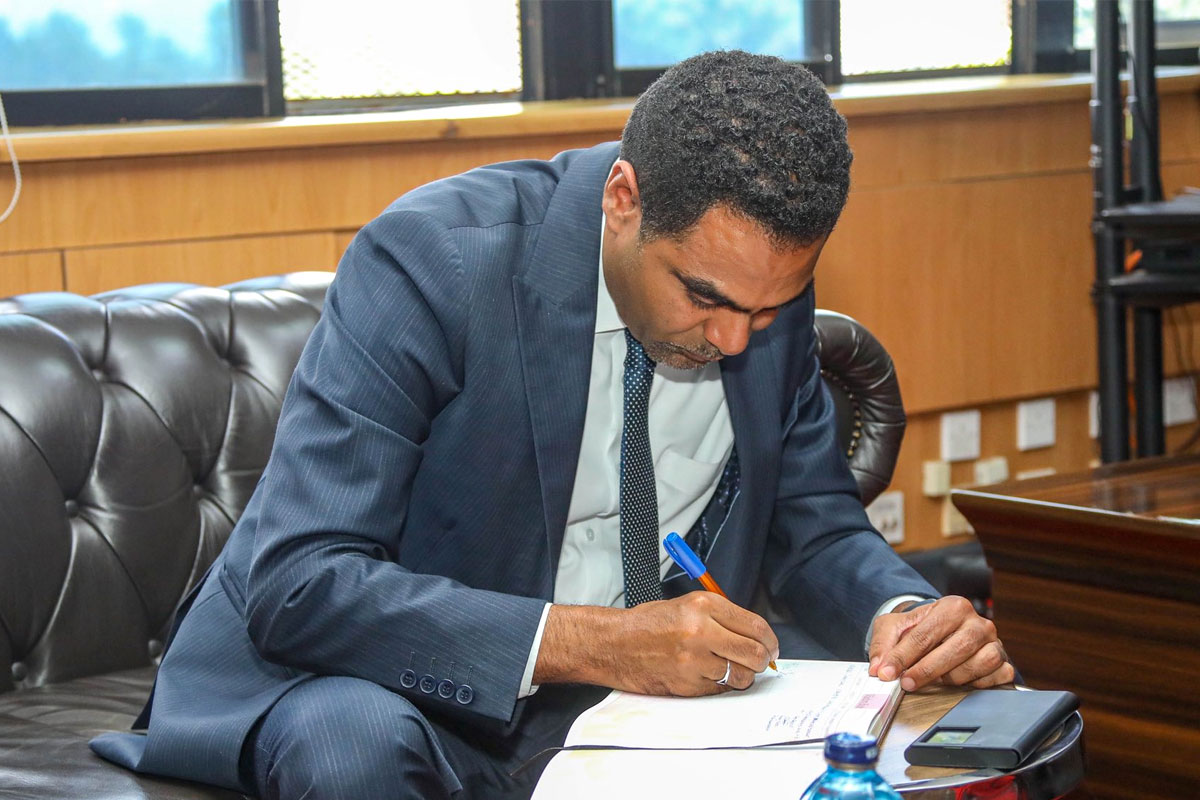
The leadership crisis at Football Kenya Federation has escalated after FKF President Hussein Mohammed dismissed the National Executive Committee (NEC) resolutions seeking to oust him from office, terming them unconstitutional and legally invalid.
In an official statement released on April 24, 2026, Hussein maintained that the alleged NEC meeting that passed the sweeping resolutions was not convened in accordance with the FKF Constitution (2017), and therefore lacks any legal standing.
President Rejects NEC Authority
Hussein argued that the process used to convene the meeting violated Article 38 (2) of the FKF Constitution, which clearly stipulates that only the president has the authority to convene NEC meetings.
He emphasized that:
He did not call or authorize any NEC meeting on the said date.
No formal request from at least 50% of NEC members was submitted to compel him to convene such a meeting.
“As such, any decisions arising from the purported meeting are irregular, unlawful, and unconstitutional,” the statement read.
Direct Response to Ouster Attempt
The president’s remarks come just hours after a section of NEC members announced resolutions directing him to step aside over allegations of financial impropriety, including the reported loss of KSh 42 million linked to CHAN 2024 accounts.
The same resolutions had also appointed FKF Deputy President Macdonald Mariga as acting president and ordered the freezing of federation bank accounts, moves now firmly rejected by the sitting president.
Media Address Scheduled
In a bid to clarify his position and respond comprehensively to the allegations, Hussein announced that he will hold a press conference on Saturday, April 25, 2026, at the FKF Headquarters in Nairobi starting at 9:00 AM (EAT).
The address is expected to provide further insight into the internal wrangles rocking Kenyan football and outline the next course of action.
Deepening FKF Power Struggle
The conflicting positions between the NEC faction and the FKF president now set the stage for a full-blown governance crisis within Kenyan football. With both sides claiming constitutional backing, the dispute could potentially draw the attention of global football bodies such as FIFA and Confederation of African Football.
As the situation unfolds, stakeholders across the football ecosystem, including clubs, players, sponsors, and fans, are left grappling with uncertainty over leadership, governance, and the future direction of the sport in the country.
