


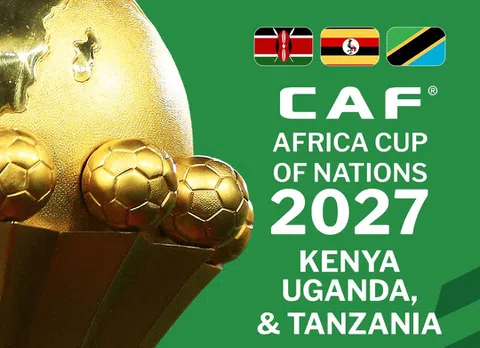
At first glance, the idea of elections interfering with the Africa Cup of Nations feels almost sacrilegious. AFCON is Africa’s grand football festival, a rare moment when politics, borders and everyday struggles are supposed to fade into the background. But reality, especially in our part of the world, has a stubborn way of intruding.
Recent remarks by AFCON Local Organising Committee chairman Nicholas Musonye have reopened an uncomfortable but necessary debate: should Kenya really host AFCON in 2027, a year that also coincides with a high-stakes general election?
From a purely emotional standpoint, the answer is no. Football should not bow to politics. But from a practical and security perspective, Musonye’s caution makes sense. Elections in East Africa, including in Kenya are rarely low-key affairs. They stretch security agencies, heighten tensions and consume national attention. Expecting the same system to flawlessly host Africa’s biggest sporting event at the same time may be asking too much.

Musonye’s warning, delivered in an interview with Agence France-Presse, is not alarmist, it is grounded in recent history. Election cycles in Kenya, Uganda and Tanzania have often been marked by uncertainty, protests and heavy security deployments. AFCON, on the other hand, demands absolute stability: secure stadiums, safe fan zones, smooth transport and a welcoming environment for teams and officials.
Kenya is not hosting alone. The tournament is a joint Pamoja bid with Uganda and Tanzania, a symbol of regional unity and ambition. A poorly managed tournament due to election-related disruptions would not just embarrass Kenya; it would dent East Africa’s credibility on the continental stage and test its relationship with the Confederation of African Football.
Pushing AFCON to 2028, if agreed collectively, should not be viewed as retreat or failure. Instead, it could be seen as maturity, choosing preparedness over pride, safety over symbolism. Africa has waited decades for AFCON to return to East Africa; rushing it into a politically charged year could undermine that long-awaited moment.
In the end, the question is not whether elections should disrupt AFCON. Ideally, they shouldn’t. But if history tells us anything, it is that ignoring political reality does not make it disappear.
Sometimes, the smartest play is not the most glamorous one, it’s the one that ensures the final whistle blows in peace. ⚽
