



Kenya’s preparations for the 2027 Africa Cup of Nations have been thrown into uncertainty after the government admitted that the country’s main stadiums may not be ready within the required timelines.
Appearing before the National Assembly’s Committee on Sports and Culture, Sports Principal Secretary Elijah Mwangi revealed that both Moi International Sports Centre, Kasarani, and the Nyayo National Stadium are behind schedule due to massive unpaid debts owed to contractors.
According to Mwangi, the government owes more than KSh 3.7 billion to the contractor handling renovations at Kasarani Stadium. As a result, the contractor has significantly reduced its workforce, slowing down construction works.
“At Kasarani Stadium, we owe the contractor in excess of KSh 3.7 billion, and they have scaled back their workforce. With that, we feel we may not be ready within the six months,” Mwangi told MPs.
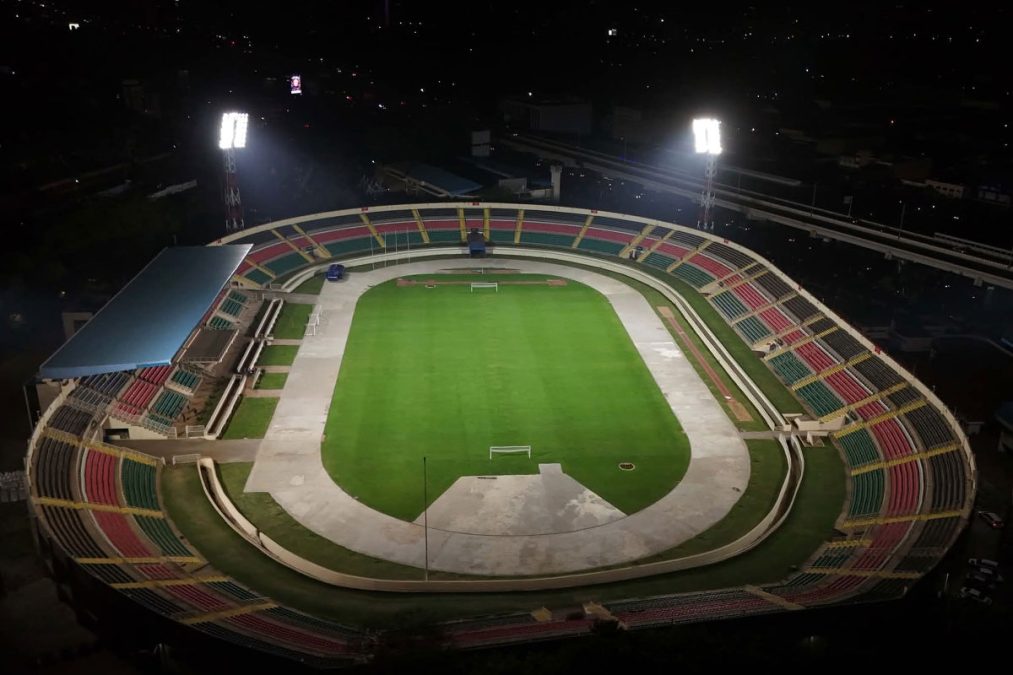
The situation at Nyayo Stadium is even more critical. Mwangi disclosed that over KSh 2.6 billion remains unpaid, prompting the contractor to abandon the site entirely.
“Similarly, at Nyayo, we have not paid over KSh 2.6 billion and the contractor has already vacated the site. Therefore, we have nothing to show,” he added.
The delays pose a significant threat to Kenya’s role in hosting the tournament, which it is set to co-host alongside Uganda and Tanzania. The Confederation of African Football has strict infrastructure requirements and timelines that host nations must meet ahead of the competition.

With just months left to meet CAF’s benchmarks, concerns are mounting that Kenya could fall short, potentially risking a reduction in hosting rights or, in a worst-case scenario, exclusion from the hosting arrangement altogether.
The latest revelations highlight deeper concerns about funding gaps and project management within the country’s sports infrastructure development. Stakeholders are now calling for urgent government intervention to settle pending bills and accelerate construction works.
As the clock ticks, Kenya’s ability to deliver on its AFCON promise will depend on swift financial action and renewed momentum at the stalled stadium sites.
